Over the Transom | 05.15.26
More Transom 25 speakers, semi-efficient narrative, The Little Things

Hi there! One announcement:
Tickets are officially SOLD OUT for Transom 25! That was fast. We are so excited to see you all in September.
For those of you who live locally, we do have a limited number of tickets available to some of the individual events at the festival. More details and a link to purchase here.
What’s new on Transom


Announcing… more Transom 25 featured speakers!
The lineup for the festival keeps getting better and better, and today we’re thrilled to announce the latest additions: producer & poet Sean Cole, Post Reports founding host Martine Powers, Radio Diaries founder Joe Richman, as well as Jason Moon and Lauren Chooljian from NHPR’s Document team. We’ll be releasing more schedule details soon, so keep an eye out and don’t miss the chance to learn from the best in the biz throughout the weekend.
More to explore on Transom.org:
May’s All Hear features tons of audio opportunities, including a pitch call for Good Tape Issue 04 — exploring the theme of “chemistry” in podcasting and audio culture.
Read all about our recent live storytelling show in Brattleboro, VT, and listen to the wonderful pieces community members made.
Were you as delighted as we were by the Artemis II moon mission? Revisit this episode of Sound School with Rob Rosenthal for more stories from outer space.
Tip of the week: semi-efficient narrative production
You and I know the refrain: narrative podcasts are expensive to produce and they take a long time to make. This is true — there are some corners you just can’t cut, and we should devote the requisite time and money to making this stuff. But in the always-on world we live in today, it helps to get crafty. And there are ways to make really good stuff without a giant budget for travel and interns. Which is why Karen Given wrote this helpful how-to about how to be semi-efficient when it comes to narrative podcasting. As the longtime Executive Producer and Host of WBUR and NPR’s Only A Game, Given said she was most proud of being “able to produce a full hour of narrative programming, 52 weeks a year, with a staff of five.” Read Given’s Eight Axioms of Semi-Efficient Narrative Production and learn from this well-oiled machine.
Axiom #3: Embrace the One Voice Story
We’re taught to talk to everyone. Before Only A Game switched to narrative, the checklist for every sporting event was always the same: talk to the coach, the opposing coach, a bunch of players, fans of the winning team, fans of the losing team and maybe a sports journalist for some context. One time, I even interviewed a dog who was in the crowd at a human dogsled race. (Yep, that’s also a thing!)
But the longest story we ever aired on Only A Game happened after we made the switch to narrative. And it was built on a single interview. And it started as an idea that didn’t seem very promising.
A group of Denver Broncos fans were trying to get a man named Gene Mingo inducted into the Pro Football Hall of Fame. Under normal circumstances, I don’t give a hoot about Hall of Fame inductions. But as it turned out, Gene Mingo had lived a fascinating life. Better yet, he was able to remember and describe his experiences in vivid detail. He was open and honest — especially when it came to his own bad decisions.
In narrative, more voices do not make for a better story. The only thing guaranteed to make for a better story is… a better story. So if you luck into a subject who has something really compelling to say, go ahead. Let them say it.
From the archives
The Little Things by Sean Cole
If you want to take advantage of Karen Given’s excellent tip above and get that golden, full-episode-carrying interview, you’ll need to ask very good questions. Poet and longtime producer of This American Life Sean Cole had a great tip for getting tape that sings in this piece from 2010 on how to capture ‘the little things’:
I was interviewing (for the 13-thousanth time) a guy who had tried to set up a kind of homesteady outpost with his girlfriend and two of their pals in the desert in far west Texas. I had become really fond of them after documenting the lead up to departure. Next thing I knew, Gene and his girlfriend were in Chicago. They were too low on money. And I asked him if there was any sort of “Oh Jesus” moment when he realized this plan wasn’t going to work, at least not right now.
“There was a very significant ‘Oh Jesus’ moment,” he said.
And as he described it to me I found myself prompting him with questions I’d never ask otherwise. “Where did you guys have the conversation? Was it on the land or elsewhere? Was it day or night? Were you sitting or standing?”
This is something I should do all the time. I daresay it’s something we should ALL do all the time. It feels awkward. It’s not the way you’d converse with someone at a dinner party. Plus, most of it may not end up in your story at all. But some of it will. The word “slapped” can’t happen without “How did he give you the stop watch?” “Slapped” and “swaggered” are preferable to “gave” and “entered.”
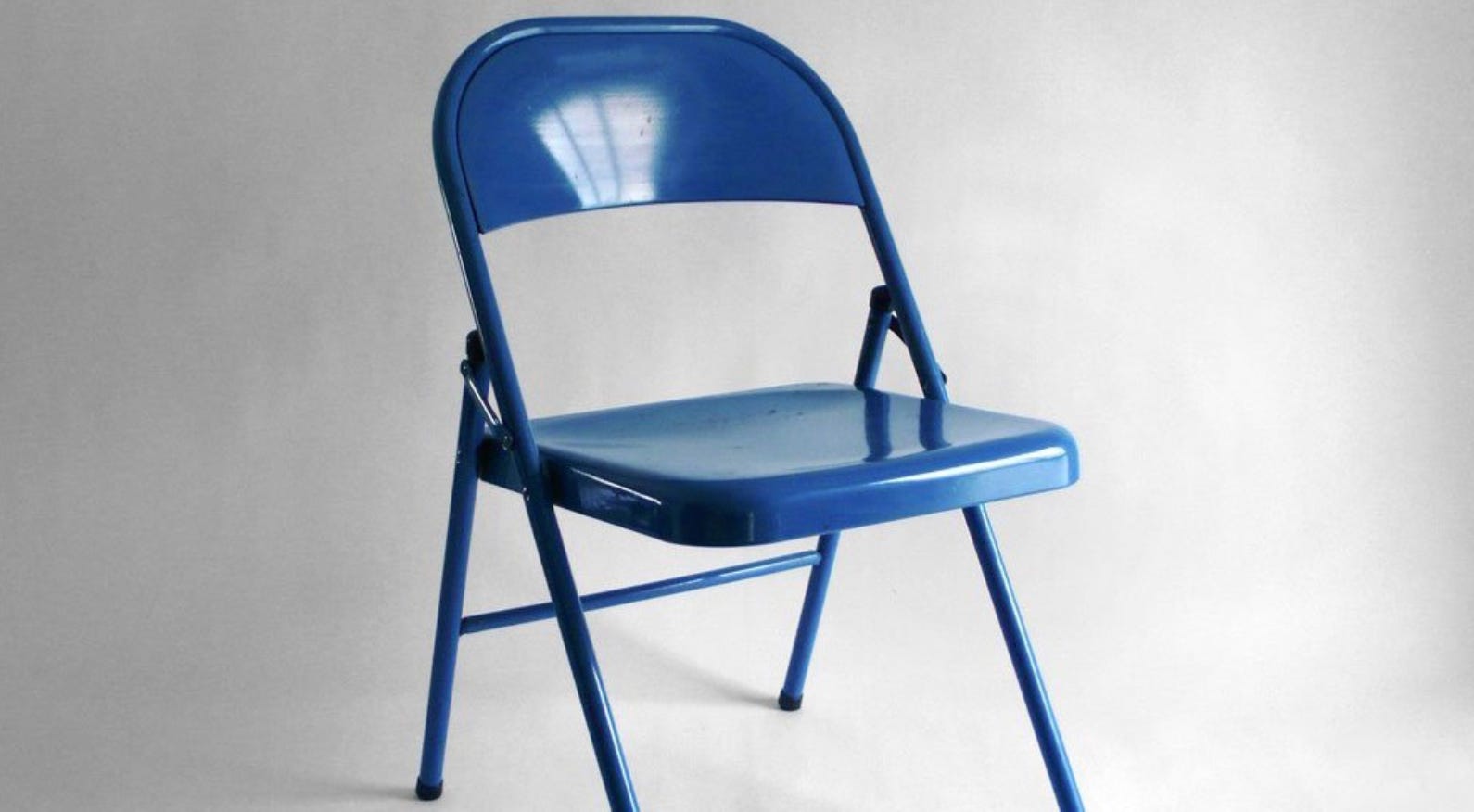
To generalize, I think print reporters are a lot more detailed in their questioning. I’ve known radio reporters who compare. But as a body, I think we could stand to fixate on the little things a lot more. The little things are where the pigment is – the one blue folding chair at the funeral. The more specific synonym for “walked” is where the better writing is, the storytelling. Novelists can pluck any adjective out of the air. Us? We have to ask the question that makes the answerer’s face go all quizzical. Let’s do that more.
Community corner
This week’s question: Are you coming to Transom 25? Do you have questions? Let us know in the comments!
Amazing advice for any type of storyteller: "In narrative, more voices do not make for a better story. The only thing guaranteed to make for a better story is… a better story. So if you luck into a subject who has something really compelling to say, go ahead. Let them say it."