Over the Transom | 02.06.26
Erica Heilman's rules, talking to strangers, and community visions

Hi! Here are some reminders:
Two weeks left to apply to the Bloomington, IN Traveling Workshop! It will be lead by David Weinberg with support from Alex Chambers, host and reporter from WFIU’s arts and culture desk. Get your application in by February 20, 2026 (11:59 p.m. EDT). Thank you to our presenting sponsor Hindenburg for supporting the Traveling Workshops! Learn more and apply here.
Join us Wednesday, March 11th in Brattleboro, VT for an evening of live, true stories told by community members! It’s part of our collaboration with Retreat Farm’s America at 250 series. Get your tickets here! And if you’re interested in being a storyteller, visit this link for more information.
The Transom Traveling Workshop in Bombay Beach is wrapping up, and student Swati Singh wrote a pop-up newsletter documenting her experience there. Check it out here. Here’s an excerpt from the first one:
“David assured me that nobody has failed out of this workshop or not made a story. So I’m just going to trust myself, the moment, and go with the flow. I’m going to carry my gear with me, make the mic an extension of my body, and soak it all in. If trash can become art, I can be a dork strapped with gear. I can do this.”
What’s new on Transom
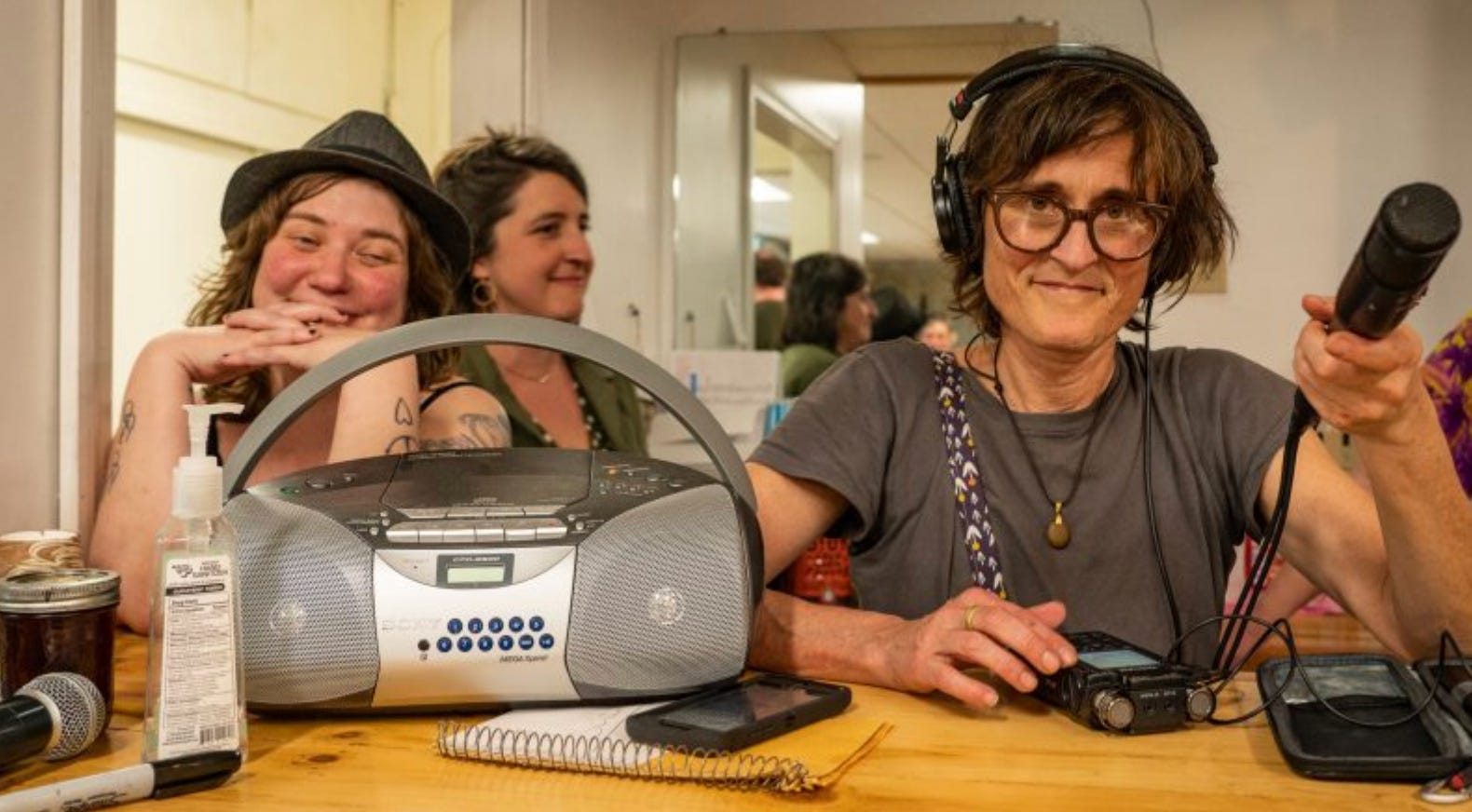
My Rules of Radio by Erica Heilman
Intro from Sophie Crane and Jay Allison:
America is in crisis, this is no secret. People are looking for answers, for action to take, for ways to make things better without violence. In our work, we record and share. That can feel like a small thing, chronicling life as it happens around us. But, wait. It’s not a small thing. Look at Minneapolis. Community members recording life around them is turning the tide. They are carrying the truth of evidence. They are documenting.
That’s what we do. And, here at the Transom Story Lab, we have started a new project dedicated to reflecting this country back to itself. It’s called The Listeners and derives from the belief that solidarity comes from listening, deep observation, reflecting local community truths, and sharing them widely — that’s the stuff of democracy. This belief is nothing new. It’s at the core of the reason that, for 25 years, Transom has passed on the skills of documentary storytelling to new voices and maintained a robust archive of the more experienced ones. A healthy democracy depends on having people trained to do this work: Witnesses, observers, recordists.
It also depends on having people trained to listen, which is something Erica Heilman does better than just about anyone. At the end of last year, together with Erica, Transom announced The Listeners, an honest, poetic exploration of the places we live.
Erica is a model of steady, hyperlocal, poetic truth-telling and we turn to her now for some of her basic principles, something we’re grateful she was willing to do because she didn’t want to. She said that offering this to her colleagues was “like singing acapella, naked.” But she did it. And it’s a gift to read:
“I still don’t know what to say when people ask me what Rumble Strip is about. But at least now I know why I make the show and what I want it to do. It sounds dramatic and it doesn’t always work, but my goal in every interview is to fall in love with the person. I don’t need to like them, but I want to try and love them. And then I want listeners to do the same. I want to fall into someone who is unlike me and imagine their life from the inside out and then try and recreate that experience for listeners. That probably sounds a little pretentious, but it’s as close as I can come to describing why I keep making this show over and over, into my dotage.
…
So these are some of my ‘rules’, and like all rules, they get broken sometimes. Every story I’ve ever made breaks at least one or two of these rules. But I believe in all of them and they shape the way my show sounds. There are plenty of great audio stories made by other people that don’t follow these rules. But these are mine…”
More to explore on Transom.org:
Catch up on the latest from Sound School and Rob Rosenthal, including a conversation with a young man in South Africa working through how to report on emotions.
Tip of the week: talking to strangers

Aaron Henkin gave himself an assignment. He was going to meet and interview every single person who lived on one city block in Baltimore and see what happened. But he pretty quickly ran into a problem: people hate talking to strangers. We’re taught to avoid it.
This was true in 2013, when Henkin started this project, and it’s true now. But in Minneapolis and across the country, we’re seeing the result of what happens when we choose to see our neighbors and community members not as the strangers they are, but as our fellow citizens. People worth caring for, protecting, and talking to. Here are some insights Henkin gained from his experience:
When you can convince people that you really just want to listen to what they have to say, that person will open their heart to you every time. When you listen to people you’re giving them a very rare and special gift.
When people tell you a story, it’s like they’re singing you a song. Every voice has its own musicality, its own tone and timbre. And even just a little half-sentence fragment can go in through your ear and tell you something profound about a person’s soul.
The public radio airwaves can be an echo chamber for predictable voices saying unsurprising things about familiar topics. But those same airwaves can also be a blank canvas for something different, for something a little more impressionistic, something abstract, that achieves its effect through tone and mood and juxtaposition, and honors listeners’ powers of inference and empathy.
Finally, it might make you nervous. It might feel awkward. It might be very counter-intuitive, the last thing you’re inclined to do, but if you talk to strangers, it’s a guaranteed way to improve your day and theirs.
From the archives
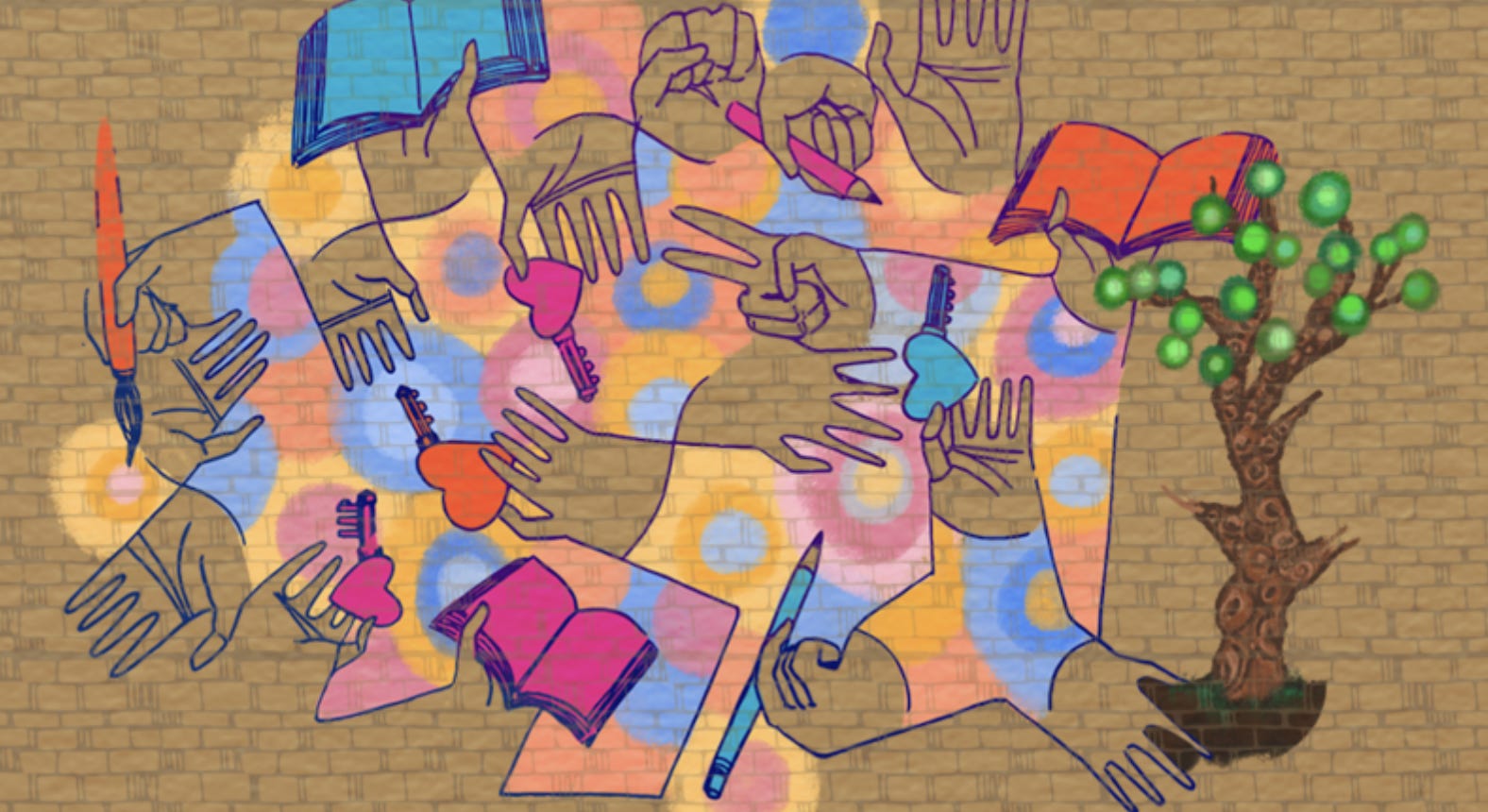
Community Visions: Outside My Door by Anissa Weinraub
In order to change things, you must first have the courage to imagine a better future. What would the world around you look like? What would it feel like?
As part of a larger project with Philadelphia public school students and educators, Anissa Weinraub asked participants: If your community had everything you needed to fully live and thrive, what would it be like outside your door? What emerged became a tapestry of voices imagining peace, beauty, and community care — a ‘joyful blueprint’ for a future that can be realized.
“If you don’t know: Philadelphia is the poorest major city in this country. The homicide rate is at record levels, leaving heartbroken families and communities — disproportionately Black, immigrant and working class — to deal with relentless death and the fallout cycles of retaliation. Our economy constantly denies people the ability to live in dignity. And our police have proven that they are not the means of stopping violence or creating true public safety.
Given this stark reality, it is urgent to listen to the ideas of those who are most marginalized by the policy failures of our time. Their vision is a joyful blueprint for a transformed future.”
Community corner
This week’s question: What does your community need right now? Share links or ideas to support in the comments!